Smart Contracts for Automatic Supplier Payments and Invoicing in 2026
Automate supplier payments with smart contracts: conditional release on delivery confirmation, automatic invoice matching, reduced payment delays. How Italian SMEs save 15-20 hours/month on accounts payable.
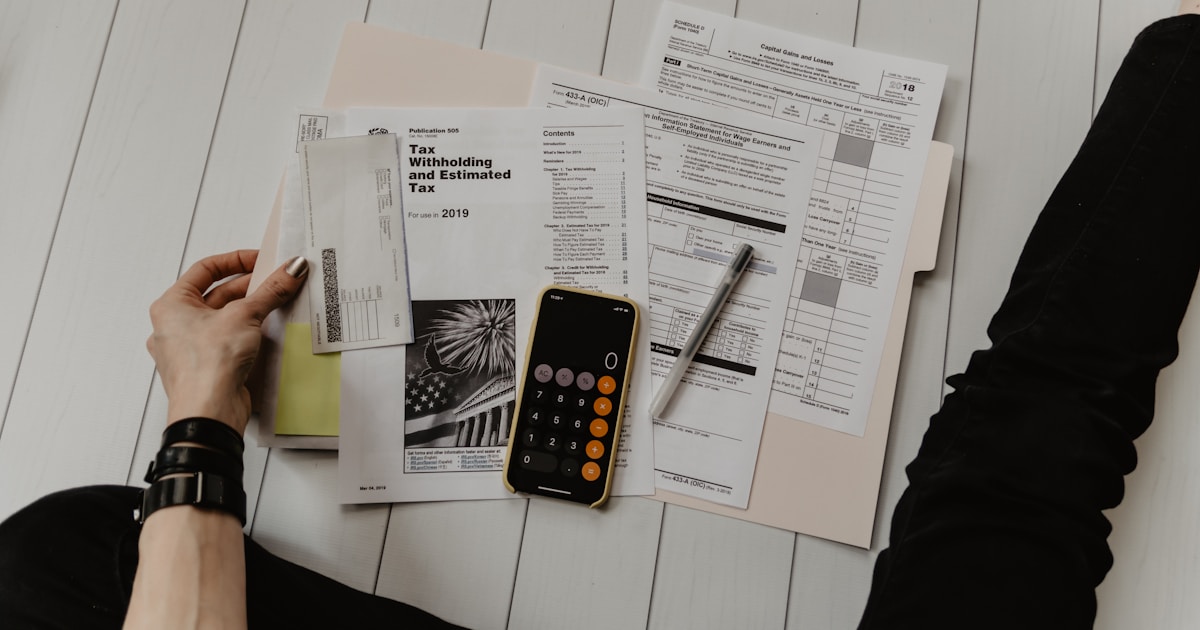
The Problem: Why Supplier Payments Are an Operational Nightmare
In Italy, average B2B payment times are among the longest in Europe: 53 days according to the European Payment Report 2025, compared to 34 in Germany and 29 in the Netherlands. But the number does not tell the whole story. Behind those 53 days is a fragmented manual process that consumes resources:
- Purchase order (PO) creation: procurement manager creates the order, gets director approval, sends to supplier. Time: 1-3 days.
- Goods receipt: warehouse receives goods, verifies quantity and quality, registers entry in ERP. Time: 1-2 days.
- Invoice receipt: supplier issues electronic invoice via SDI (Italy's mandatory e-invoicing system). Accounting receives it, logs it, matches it to PO and delivery note. Time: 2-5 days.
- Three-way matching: accounting verifies that PO, delivery note, and invoice match -- same amount, same quantity, same items. Time: 1-3 days. If they do not match, an email cycle begins to resolve discrepancies.
- Payment approval: the manager signs authorization. In many Italian SMEs, two signatures are required for amounts above EUR 5,000. Time: 2-7 days.
- Payment execution: the payments office enters the bank transfer, waits for settlement. Time: 2-5 days.
Total: 10-25 working days, spread across 60-90 calendar days. For an SME with 30-50 active suppliers, this process repeats hundreds of times monthly. The hidden cost? Approximately EUR 15-25 per manually processed invoice, according to Politecnico di Milano estimates.
Real Scenario: Veneto Manufacturing SME with 40 Suppliers
Metalveneto (fictional name) produces precision mechanical components in Vicenza. It has 40 active suppliers -- raw materials (steel, aluminum), components, services (heat treatment, painting), consumables. It processes about 200 supplier invoices per month.
The situation before smart contracts:
- 2 accounting staff dedicated to supplier reconciliation (cost: EUR 70,000/year)
- 45% of invoices show discrepancies at first matching (quantities, prices, items)
- 12% of suppliers charge late payment penalties (average EUR 800/year per supplier)
- 3 strategic suppliers have threatened to stop deliveries due to chronic delays
- The CFO spends 4-6 hours per week signing payment authorizations
The Smart Contract + AI Flow: Step by Step
| Step | Action | Who Does It | Time |
|---|---|---|---|
| 1 | Purchase order issued and recorded on blockchain | Procurement manager + smart contract | Instant |
| 2 | Goods received, warehouse staff scans barcode/QR | Warehouse staff + IoT oracle | 5 minutes |
| 3 | Smart contract verifies: goods received match PO? | Smart contract (automatic) | Instant |
| 4 | Electronic invoice received via SDI | SDI system + integration | Automatic |
| 5 | AI performs three-way matching: PO vs delivery note vs invoice | AI agent | 30 seconds |
| 6a | Match OK: smart contract releases payment | Smart contract (automatic) | 1-24 hours |
| 6b | Discrepancy: AI flags to manager with details | AI agent + human notification | Escalation in 5 min |
| 7 | Confirmation electronic invoice generated via SDI | Automatic SDI integration | Automatic |
Result for Metalveneto: payment times from 67 days to 5 days average. Accounting staff reallocated from reconciliation to analysis and control. No supplier charges late fees anymore. Strategic suppliers offer 2-3% early payment discounts -- saving EUR 40,000-60,000/year.
Want to Automate Your Supplier Payments?
SUPALABS implements smart contracts for supplier payment management with electronic invoicing (SDI) integration. From process analysis to a working system.
Book a Free ConsultationCosts and Platforms
Cost Breakdown
| Item | Cost | Notes |
|---|---|---|
| Smart contract development + dashboard | EUR 8,000 - 25,000 | One-time. Includes PO logic, matching, payment, escrow |
| SDI integration (electronic invoicing) | EUR 3,000 - 5,000 | Connection to Italy's e-invoicing exchange system |
| AI integration (matching + anomaly detection) | EUR 3,000 - 8,000 | One-time + EUR 200-500/month for AI APIs |
| Per-transaction blockchain cost | EUR 0.50 - 2.00 | Includes gas fee + oracle fee |
| ERP integration | EUR 2,000 - 10,000 | Depends on ERP (SAP, Zucchetti, TeamSystem, custom) |
Platforms
- SAP Business Network (blockchain module): for companies already on SAP. Native S/4HANA integration. High cost but fast ROI for high volumes.
- Oracle Blockchain Platform: for Oracle ERP users. Hyperledger Fabric underneath, pre-built integration with Oracle Financials.
- Custom Hyperledger Fabric solutions: for SMEs wanting full control. Permissioned blockchain (suppliers are invited). No gas costs.
- Polygon/Base + custom smart contracts: for those preferring public blockchain. Lowest costs, maximum transparency, DeFi compatibility for supply chain finance.
Regulatory Framework
Electronic Invoicing and SDI
Italy has mandated electronic invoicing since 2019 for all businesses. Every invoice passes through the Sistema di Interscambio (SDI) in XML format. The smart contract integrates with SDI without changing the existing invoicing flow -- it adds a parallel layer that automates reconciliation and payment.
Anti-Money Laundering (D.Lgs. 231/2007)
For payments above certain thresholds, anti-money laundering regulations require adequate counterparty verification. The smart contract can integrate automatic KYC/AML checks: before releasing payment, it verifies the supplier against financial registries and sanctions lists. This immutable blockchain audit trail adds value during regulatory inspections.
Does the supplier need to use blockchain?
No. The supplier continues issuing electronic invoices via SDI as they do today. Payment arrives in their traditional bank account. Blockchain is invisible to the supplier -- it works behind the scenes at the paying company. The only visible change: they get paid much faster.
How long until ROI?
For an SME processing 200+ invoices/month, typical ROI appears in 4-8 months. Savings sources: reduced reconciliation staff (or reallocation to higher-value work), eliminated late payment penalties, early payment discounts (2-3% on total purchases), reduced errors. An SME with EUR 2M/year in purchases can save EUR 40,000-80,000/year.
Learn how autonomous AI agents with blockchain are transforming business automation, or read about smart contracts for rental management and real estate tokenization in Italy.
SUPALABS implements smart contracts for supplier payments with SDI integration. Free process analysis, ROI in 4-8 months.
📊 Key Statistics (2025)
Frequently Asked Questions
Share this article
Found this article helpful? Share it with your team and help other agencies optimize their processes!
Testimonials
What Our Clients Say
Companies across Europe have transformed their processes with our AI and automation solutions.
“SUPALABS helped us reduce our client onboarding time by 60% through smart automation. ROI was immediate.”
“The AI tools recommendations transformed our content creation process. We're producing 3x more content with the same team.”
“Implementation was seamless and the results exceeded expectations. Our team efficiency increased dramatically.”
“We process 10x more orders with the same team. The AI handles routing, scheduling, and customer updates automatically.”
“The compliance automation alone saved us €200K in the first year. Zero errors in regulatory reporting.”
“AI-powered analytics transformed our decision-making. We cut campaign waste by 45% in the first quarter.”
“SUPALABS helped us reduce our client onboarding time by 60% through smart automation. ROI was immediate.”
“The AI tools recommendations transformed our content creation process. We're producing 3x more content with the same team.”
“Implementation was seamless and the results exceeded expectations. Our team efficiency increased dramatically.”
“We process 10x more orders with the same team. The AI handles routing, scheduling, and customer updates automatically.”
“The compliance automation alone saved us €200K in the first year. Zero errors in regulatory reporting.”
“AI-powered analytics transformed our decision-making. We cut campaign waste by 45% in the first quarter.”
Related Articles
Goods Receipt vs. Invoice Matching: How to Automate 3-Way Matching in Accounts Payable
Goods received but the invoice doesn't match? Automated goods-receipt matching cuts AP cost per invoice from $9.84 average to $2.65 for Best-in-Class teams (Ardent Partners 2025).
Why AI Stalls on Legacy ERPs: The Data Layer That Fixes It (2026)
Company AI assistants stall on legacy ERPs with no API. Here's what building a unified data layer for old gestionali taught us, and how to tell if you need one.
How to Label AI-Generated Content Under the EU AI Act (Article 50)
Article 50 of the EU AI Act applies from 2 August 2026. A practical implementation guide: building the AI output inventory, dual-layer labelling, C2PA content credentials, chatbot disclosure, and where machine-readable marking is technically feasible.

Mike Cecconello
Founder, SUPALABS
Experience
5+ years building AI and automation systems for European companies
Track Record
Builds on top of the systems companies already run — no ERP, CRM or gestionale replaced
Ships the first workflow to production in 6 weeks, owned by the client team
Expertise
- ▪AI-Native Process Redesign
- ▪Production AI Systems
- ▪Embedded Delivery
- ▪Enterprise AI Strategy