Automated Bookkeeping and Accounting for Italian SMBs — 2026 Guide
Guide: Automated Bookkeeping and Accounting for Italian SMBs — 2026...
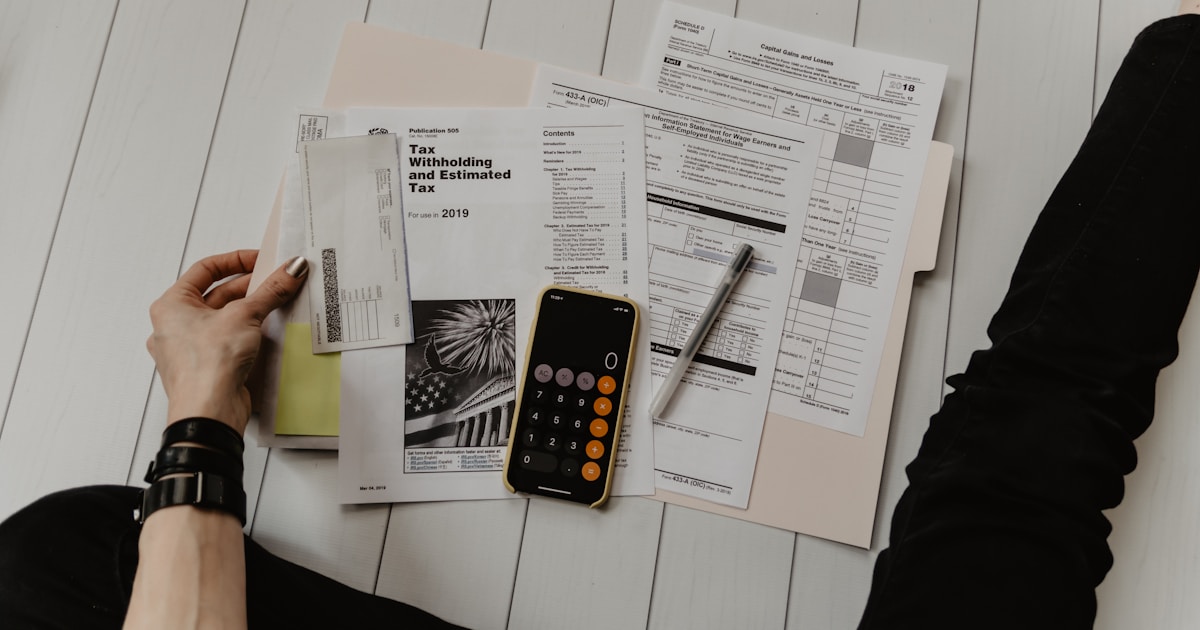
Automated bookkeeping and accounting allows Italian SMBs to cut manual data entry time by up to 80%, with implementation costs between €2,500 and €15,000 and an average ROI in 3-6 months. Custom AI solutions connect Italian banks (PSD2 Open Banking), ERPs and accounting software like TeamSystem, Zucchetti and Danea for a fully automated financial back-office.
What Is Bookkeeping Automation for Italian SMBs?
Bookkeeping in Italy revolves around the prima nota — the chronological ledger where every business transaction is recorded. For Italian SMBs, manually maintaining this ledger consumes an average of 8-15 hours per week of administrative work — time taken away from growing the business.
Automated bookkeeping for Italian SMBs transforms this process: bank transactions are imported automatically, movements are categorised by AI, bank reconciliation happens in real time, and electronic invoices received via the SDI (Sistema di Interscambio) are registered without any manual intervention.
According to a 2025 Unioncamere study, 67% of Italian SMBs lose more than 10 hours per week to repetitive manual accounting tasks. With accounting automation, these businesses reduce that time by an average of 82%.
Bookkeeping Processes That Can Be Automated
- Bank statement import: direct connection to Italian banks (Intesa Sanpaolo, UniCredit, BancoBPM, Fineco, BPER) via PSD2 Open Banking APIs
- Automatic categorisation: AI that learns your chart of accounts and company-specific accounting rules
- Bank reconciliation: automatic matching between bank movements and issued/received invoices
- SDI invoice registration: direct import of electronic invoices from Italy's national interchange system
- Expense management: OCR on receipts and expense claims with automatic ledger entry
- Periodic closes: automated monthly and quarterly reports plus periodic VAT (liquidazione IVA)
How Automated Bank Reconciliation Works in Italy
Automated bank reconciliation is at the heart of accounting automation for Italian SMBs. Through PSD2 Open Banking APIs (mandatory in Italy since 2019), corporate bank accounts can be connected directly to accounting software — no more downloading CSV files and uploading them manually.
The automated process works like this:
- Daily (or in real time), bank movements are imported automatically into the ERP or accounting system
- The AI analyses the description, amount and beneficiary/originator of each movement
- The system suggests (or automatically applies) the correct accounting code
- Unmatched invoices are flagged for human review
- The monthly reconciliation report is generated automatically, ready for the accountant
Software like Fatture in Cloud, TeamSystem and Danea Easyfatt already offer native bank connectors. For SMBs using older ERPs or custom management systems, these flows can be built with n8n or Make.com, integrating via REST APIs.
Real-World Example: 8-Person Law Firm in Milan
A Milan law firm with 8 professionals was manually managing 400-500 bank movements per month across three accounts. After implementing an automated reconciliation flow via n8n + Fineco API + TeamSystem:
- Monthly reconciliation time: from 14 hours to 50 minutes of final review only
- Categorisation errors: from 20-25 per month to 2-3 edge cases
- Total investment: €4,200 one-time + €180/month maintenance
- ROI achieved: 4 months
SUPALABS builds custom AI automation for Italian SMBs. Free audit, first results in 6 weeks.
Accounting Software for Italian SMBs: 2026 Comparison
The Italian market offers several solutions for accounting automation. The right choice depends on company size, existing software, and the desired level of automation.
| Software | Target | Bank Automation | Native SDI | Price/month |
|---|---|---|---|---|
| Fatture in Cloud | Freelancers, micro-SMBs | ✓ PSD2 Open Banking | ✓ | €8–35 |
| Danea Easyfatt | SMBs up to 20 people | Partial (CSV export) | ✓ | €180–320/year |
| TeamSystem | Mid-size SMBs, firms | ✓ Full API | ✓ | €150–500 |
| Zucchetti | Structured SMBs | ✓ Full API | ✓ | Custom |
| Custom n8n/AI solution | Any Italian SMB | ✓ Full + AI categorisation | ✓ via SDI API | €180–400 |
For SMBs already using TeamSystem or Zucchetti but not leveraging advanced automation features, a custom automation layer (n8n + AI) can extend existing capabilities without changing software or migrating historical data.
SDI and E-Invoicing Integration in Automated Accounting
Italy's mandatory electronic invoicing via SDI creates a unique opportunity for bookkeeping automation: every invoice is already in structured XML format (FatturaPA), making automated data extraction and ledger entry technically straightforward and highly reliable.
A complete SDI-to-accounting automation flow works like this:
- Automatic reception: incoming invoices arrive at the SDI and are forwarded to the company's codice destinatario or PEC address
- Automatic XML parsing: the system extracts amount, VAT, supplier, date, description and accounting code from the FatturaPA XML file
- Ledger entry: the invoice is registered in the ERP with the correct category and VAT split
- Payment matching: when the bank transfer leaves the account, it is automatically matched to the corresponding passive invoice
- Due date alerts: automatic notifications via email or Slack for invoices approaching their payment deadline
This flow completely eliminates double data entry — one of the most costly and widespread inefficiencies in Italian SMBs, many of which still manually register passive invoices after having already received them via PEC.
For more on electronic invoicing and SDI, see our complete guide to e-invoicing and SDI automation 2026. Explore our full automation features for Italian SMBs.
Costs and ROI of SMB Accounting Automation: Full Table
The most frequent question we receive from business owners and finance managers is: how much does it cost to automate bookkeeping, and when do I break even? The table below is based on real projects delivered by SUPALABS in 2024-2025.
| Automation Scope | Implementation Cost | Monthly Cost | Hours Saved/Month | Estimated ROI |
|---|---|---|---|---|
| Basic bank reconciliation (1 account) | €2,500 – €3,500 | €120–180 | 8–12 hours | 3–4 months |
| SDI invoice import + categorisation | €3,500 – €5,500 | €180–250 | 12–20 hours | 4–5 months |
| Reconciliation + SDI + expense management | €5,500 – €8,000 | €250–350 | 20–35 hours | 3–5 months |
| Full accounting back-office automation | €10,000 – €15,000 | €350–500 | 40–60 hours | 4–6 months |
How we calculate ROI: savings are calculated based on the hourly cost of an administrative employee (€18-25/hour gross) multiplied by hours saved monthly. Example: 20 hours saved × €22/hour = €440/month in direct savings, plus the value of time freed up for higher-value activities like client management and financial planning.
How to Implement Accounting Automation in Your Italian SMB: Step-by-Step
Implementing accounting automation does not necessarily require changing your ERP or accounting software. Here is the 4-phase process we use at SUPALABS:
Phase 1: Process Audit and Mapping (weeks 1-2)
- Analysis of current accounting processes and identification of bottlenecks
- Compatibility check with existing software (TeamSystem, Zucchetti, Danea, etc.)
- Mapping of bank accounts, monthly invoice volumes and transaction types
- Prioritisation: what to automate first for maximum immediate impact
Phase 2: Connection and Integration Setup (week 3)
- PSD2 Open Banking setup with corporate banks (no bank change required)
- SDI destination code configuration and automatic passive invoice forwarding
- ERP integration via REST API or certified native connectors
Phase 3: AI Training and Historical Data Testing (weeks 4-5)
- The AI model learns the company chart of accounts and specific accounting rules
- Validation testing on 3-6 months of historical transaction data
- Custom rules definition for special operations (intercompany, refunds, etc.)
Phase 4: Parallel Go-Live and Fine-Tuning (weeks 5-6)
- Launch in parallel mode (manual + automatic) for 2 weeks of validation
- Correction of residual errors and AI model update
- Handover and training for the internal administrative team
FAQ — Automated Bookkeeping for Italian SMBs
Is accounting automation legal in Italy and does it comply with tax regulations?
Yes, absolutely. Automation does not alter the accounting result — it only changes the process by which entries are generated. The ledger entries remain identical; what changes is who (or what) creates them. The accountant retains full supervision and final responsibility. The Agenzia delle Entrate and the CNDCEC have both published guidelines recognising the use of automated systems in business accounting.
Do I need to change my accounting software to automate bookkeeping?
No. We work with your existing software — TeamSystem, Zucchetti, Danea, Fatture in Cloud — adding an automation layer that integrates via API. A migration evaluation is only needed for very old software with no API at all, which is increasingly rare.
How long does it take to implement accounting automation in an Italian SMB?
For a standard implementation (bank reconciliation + SDI import), 4-6 weeks from audit to full go-live. For a fully automated accounting back-office, 8-10 weeks. Most SMBs start seeing concrete benefits during the testing phase, in weeks 3 or 4.
Can the AI make categorisation errors? How are they managed?
The initial error rate is typically 3-8%, dropping to 1-2% after 30 days of use and learning. This is why the first month always operates in "suggestion" mode — the AI proposes the categorisation, the administrator approves with one click — before switching to fully automatic mode for high-confidence transactions.
Is the accountant involved in the process? Will this damage my relationship with them?
No, quite the opposite. The accountant is involved from the start and retains full system access. They receive automated reports and have visibility over every transaction. Automation reduces their repetitive work (and therefore costs for the SMB), freeing them up for strategic consulting of greater value. Many accountants familiar with our systems actively recommend them to their own clients.
Sources & References
- Unioncamere — Italian SMB Digitalisation Report 2025
- Agenzia delle Entrate — Electronic Invoicing and SDI Guide 2024
- Banca d'Italia — PSD2 Open Banking in Italy Report 2024
- CNDCEC — AI Guidelines for Accounting Professionals 2025
- Observatory on Electronic Invoicing — Politecnico di Milano 2025
- European Banking Authority — PSD2 Implementation Report 2024
📊 Statistiques Clés (2025)
Share this article
Found this article helpful? Share it with your team and help other agencies optimize their processes!
Témoignages
Ce Que Disent Nos Clients
Les agences créatives à travers l'Europe ont transformé leurs processus grâce à nos solutions d'IA et d'automatisation.
"SUPALABS helped us reduce our client onboarding time by 60% through smart automation. ROI was immediate."
"The AI tools recommendations transformed our content creation process. We're producing 3x more content with the same team."
"Implementation was seamless and the results exceeded expectations. Our team efficiency increased dramatically."
Related Articles

Mike Cecconello
Fondateur & Expert en Automatisation IA
Expérience
5+ ans en IA & automatisation pour agences créatives
Bilan
50+ agences créatives en Europe
A aidé les agences à réduire leurs coûts de 40% grâce à l'automatisation
Expertise
- ▪Implémentation d'outils IA
- ▪Automatisation Marketing
- ▪Workflows Créatifs
- ▪Optimisation ROI