Digital Twins for Hospitals: Healthcare Space Management and BIM Integration in 2026
Digital twins for Italian hospitals: space utilization optimization, equipment tracking, energy management, emergency simulation. How healthcare facilities use BIM + AI to reduce operational costs by 15-25%.
The Challenges Facing Italian Hospitals
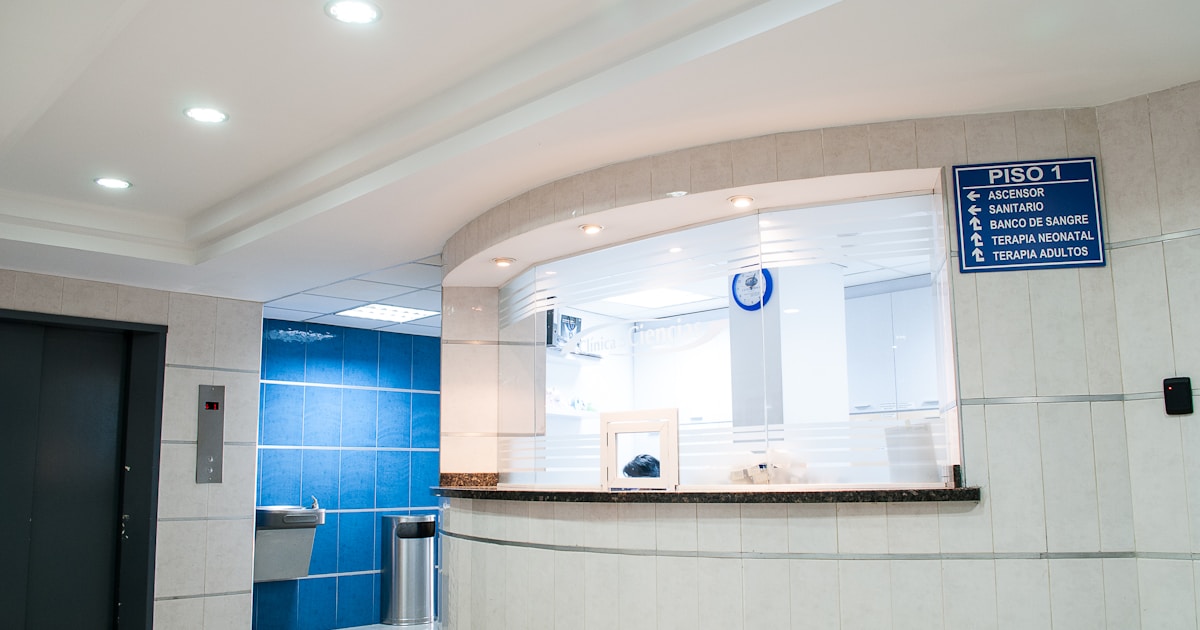
Italy's healthcare system includes over 1,000 hospital facilities, approximately 60% built before 1980. These structures must manage unparalleled complexity:
- Extreme MEP complexity: a typical hospital has HVAC systems with different requirements per department (positive-pressure operating rooms, negative-pressure isolation, sterile areas), medical gas systems, uninterruptible electrical systems, and anti-Legionella water treatment
- High energy consumption: hospitals are among the most energy-intensive buildings, averaging 200-400 kWh/m2/year (3-5x a typical office). HVAC and lighting represent 60-70% of total consumption
- Inadequate facilities: many Italian hospitals were built with now-outdated architectural and engineering standards. Compliance with fire safety regulations (D.M. September 18, 2002) and regional accreditation requires continuous upgrades
- Capacity planning: COVID-19 highlighted the need to rapidly reconfigure spaces, converting ordinary wards to ICUs and creating separate pathways for infected and non-infected patients
- Equipment tracking: a typical hospital owns thousands of mobile medical devices (infusion pumps, monitors, ventilators, beds) that are continuously moved and difficult to locate when needed
- Emergency management: hospitals require complex evacuation plans accounting for non-ambulatory patients, critical equipment, and care continuity
How Digital Twins Transform Hospital Management
A hospital digital twin is a digital replica of the entire facility integrating the architectural and MEP BIM model, real-time sensor data, people and equipment flows, and predictive models. It is the hospital's digital control room.
Space Utilization Optimization
Occupancy sensors and hospital information system data feed the digital twin with real-time utilization information for every space:
- Operating rooms: monitoring actual vs available utilization time, identifying gaps between procedures, optimizing surgical scheduling with 15-20% reduction in idle time
- Outpatient clinics: patient flow analysis and wait time optimization, space reallocation based on actual vs scheduled demand
- Bed management: real-time occupancy monitoring by ward, demand forecasting based on seasonality and historical trends, admission and discharge flow optimization
- Support areas: utilization analysis of meeting rooms, locker rooms, warehouses, identifying underutilized spaces convertible to other uses
Patient Flow Simulation
The digital twin simulates patient flows within the facility to identify bottlenecks, optimize pathways, and improve patient experience. It enables simulation of emergency department surge scenarios, evaluation of renovation impacts on patient flow, and optimization of inter-department transfer times.
Intelligent Energy Management
Energy is one of the most significant cost items for a hospital. The digital twin optimizes consumption through adaptive HVAC control based on actual room occupancy, smart lighting systems, load shifting of non-critical operations to off-peak hours, and predictive maintenance of critical HVAC systems.
Equipment Tracking (RTLS)
Real-Time Location Systems integrated into the digital twin locate every mobile medical device in real time. Technologies like BLE, UWB, or active infrared provide position accuracy of 1-3 meters. Staff no longer waste 20-30 minutes searching for equipment, and device utilization rates increase significantly.
Data Sources and Technology Requirements
| Data Source | Technology | Data Collected | Privacy | Indicative Cost |
|---|---|---|---|---|
| BIM Model | Revit, Archicad, IFC | Geometry, MEP systems, pathways | N/A | EUR 20,000-80,000 |
| Occupancy sensors | PIR, radar, ToF, AI camera | Presence, people counting | Anonymized | EUR 100-500/sensor |
| RTLS | BLE, UWB, active IR | Equipment location | Assets only (not people) | EUR 30,000-100,000 (system) |
| HVAC sensors | BACnet, Modbus, LoRaWAN | Temperature, humidity, pressure, airflow | N/A | EUR 200-1,000/sensor |
| Hospital information system | HL7 FHIR, REST API | Bed occupancy, OR scheduling | Aggregated anonymized data | EUR 10,000-30,000 (integration) |
Want to Optimize Your Healthcare Facility?
SUPALABS helps healthcare organizations implement digital twins for space optimization, energy management, and emergency preparedness.
Book a Free ConsultationItalian Regulatory Compliance for Healthcare Facilities
Italian healthcare facilities must comply with minimum structural and technological requirements (DPR January 14, 1997), fire safety regulations (D.M. September 18, 2002), and regional accreditation standards. The digital twin helps continuously monitor compliance with all these requirements and provides verifiable documentation for accreditation processes.
ROI Timeline and Cost Analysis
- Operational cost reduction: 15-25% - Energy optimization, predictive maintenance savings, improved staff efficiency
- Space utilization improvement: +20% - Better OR scheduling, reduced underutilized spaces, optimized clinic allocation
- Equipment search time reduction: -80% - RTLS enables instant device location for staff
- Energy savings: 15-25% - A typical hospital spending EUR 1-3 million/year on energy saves EUR 200,000-600,000/year
- Emergency preparedness: difficult to quantify but potentially invaluable in terms of lives saved and care continuity
For a medium hospital (300-500 beds), total first-year investment of EUR 170,000-430,000 with annual savings of EUR 300,000-800,000, yielding ROI in 12-24 months.
Frequently Asked Questions
How is patient privacy handled with the digital twin?
The hospital digital twin does not process personal patient data. It works with aggregated, anonymized data: room occupancy numbers (not identities), people flows (counts, not individual tracking), and environmental/building systems data. RTLS tracks tags on equipment, not patients. GDPR compliance is guaranteed by design.
For a comprehensive overview, see our complete guide to Digital Twins with BIM and AI. For industrial applications, read about Digital Twins for industrial plants. For retail, discover Digital Twins for shopping centers.
Digitize Your Healthcare Facility with Digital Twins
The SUPALABS team has experience digitizing complex healthcare facilities. We guide you from survey to operational platform, in compliance with healthcare regulations and patient privacy.
Request a Free Facility AnalysisShare this article
Found this article helpful? Share it with your team and help other agencies optimize their processes!
Testimonials
What Our Clients Say
Companies across Europe have transformed their processes with our AI and automation solutions.
“SUPALABS helped us reduce our client onboarding time by 60% through smart automation. ROI was immediate.”
“The AI tools recommendations transformed our content creation process. We're producing 3x more content with the same team.”
“Implementation was seamless and the results exceeded expectations. Our team efficiency increased dramatically.”
“We process 10x more orders with the same team. The AI handles routing, scheduling, and customer updates automatically.”
“The compliance automation alone saved us €200K in the first year. Zero errors in regulatory reporting.”
“AI-powered analytics transformed our decision-making. We cut campaign waste by 45% in the first quarter.”
“SUPALABS helped us reduce our client onboarding time by 60% through smart automation. ROI was immediate.”
“The AI tools recommendations transformed our content creation process. We're producing 3x more content with the same team.”
“Implementation was seamless and the results exceeded expectations. Our team efficiency increased dramatically.”
“We process 10x more orders with the same team. The AI handles routing, scheduling, and customer updates automatically.”
“The compliance automation alone saved us €200K in the first year. Zero errors in regulatory reporting.”
“AI-powered analytics transformed our decision-making. We cut campaign waste by 45% in the first quarter.”
Related Articles
Real Estate Tokenization in Italy: Blockchain Investments and Fractional Ownership in 2026
How real estate tokenization works in Italy: regulatory framework (MiCA, Consob), fractional ownership platforms, minimum investments from EUR 50, and what Italian property developers need to know.
Smart Contracts for Automatic Supplier Payments and Invoicing in 2026
Automate supplier payments with smart contracts: conditional release on delivery confirmation, automatic invoice matching, reduced payment delays. How Italian SMEs save 15-20 hours/month on accounts payable.
Smart Contracts for Rental Management: Automating Leases and Payments in 2026
Smart contracts automating rental agreements: automatic rent collection, deposit management, lease renewal triggers, maintenance escrow. Practical guide for Italian landlords and property managers.

Mike Cecconello
Founder & AI Automation Expert
Experience
5+ years in AI & automation for creative agencies
Track Record
50+ creative agencies across Europe
Helped agencies reduce costs by 40% through automation
Expertise
- ▪AI Tool Implementation
- ▪Marketing Automation
- ▪Creative Workflows
- ▪ROI Optimization